
BZX-900
Twin-Head Vacuum Capper with Automatic Cap Feeder
Designed for glass bottles with three-lug or four-lug tinplate caps. Automatic cap sorting, feeding and vacuum capping form a continuous process for glass-bottle packaging in food, canned goods, beverages, condiments and health products.
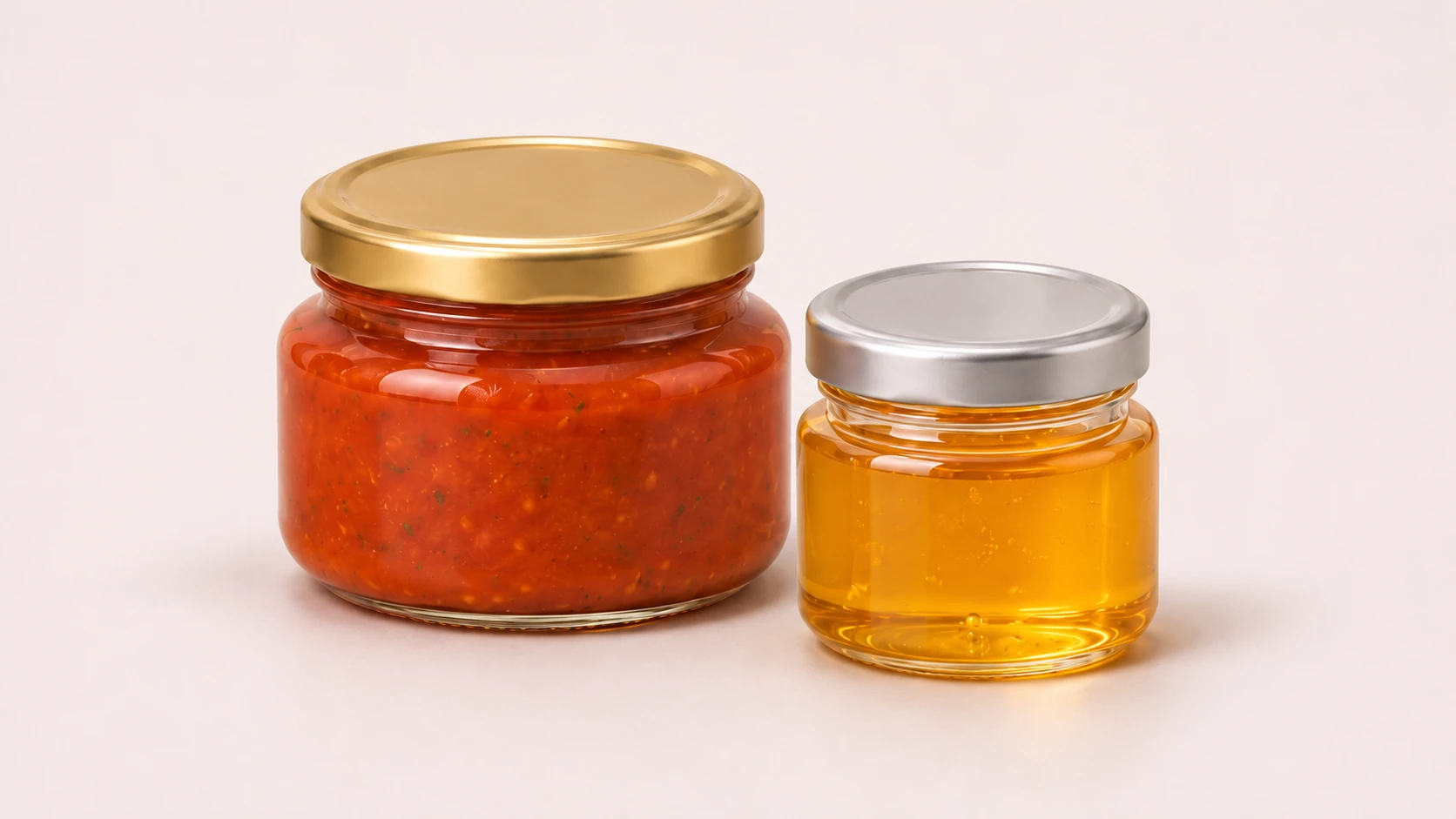
Glass jars with metal twist-off lids
For glass containers with three- or four-lug metal twist-off caps. Match the capping head and cap feeding setup to actual jars and caps.
- Glass sauce jars
- Glass honey jars
- Three- or four-lug metal closures
From automatic cap feeding to vacuum capping
Cap sorting and lifting → Cap guiding and placement → Twin-head vacuum capping
A vacuum pump evacuates the bottle. Capping torque and vacuum level can be set as required. The machine includes no-bottle/no-cap feeding and a missing-cap alarm. Appropriate change parts accommodate different bottle shapes and sizes.
Twin capping heads and controls
The two capping heads sit above the conveyor and work with the bottle-positioning mechanism to complete vacuum capping. The control panel groups the touchscreen, gauges, adjustment knobs and emergency stop.
Automatic cap feeder
The cap feeder works with the vacuum capper. Caps move from the hopper into the lifting mechanism, then along a guide track to the cap-placement position before vacuum capping.
Cap storage and lifting
The hopper holds a supply of caps. The lifting mechanism delivers them to the upper guide track. The hopper cover and feed path are shown above.
Cap guiding and placement
The guide track carries caps to the placement position above the conveyor. Bottle infeed and conveying coordinate with cap feeding for the twin-head capping process.
Matching caps and bottles
Provide actual caps and bottle-neck samples to check cap style, diameter and cap-feeding requirements. Bottle changes also require matching capping heads and change parts.
Specifications and selection
BZX-900 twin-head vacuum capper
| Item | Specification |
|---|---|
| Capping speed | Twin heads: approximately 16–20 bottles/min |
| Power | 3.7 kW (including vacuum pump and cap sorter) |
| Cap diameter | Ø38–80 mm (change of capping head required) |
| Bottle height | 75–210 mm |
| Bottle diameter | φ50–80 mm |
| Maximum vacuum | −70 kPa |
| Capping torque | 5–25 N·m |
| Air consumption | 0.3 m³/min |
These specifications apply to the vacuum capper. The accompanying cap feeder is configured for the caps and production-line connection.
Bottle infeed and conveying
Information for equipment selection
Please provide bottle and cap samples, bottle height and diameter, cap diameter, three-lug or four-lug cap type, target output and required vacuum level. These determine capping heads, change parts and cap-feeding arrangements.