Filling
Single-Head Servo Sauce Filling Machine
Servo electric-cylinder metering works with PLC and touchscreen control. For filling sauces, hot-pot bases, pickled vegetables and pastes, with operating settings adjusted to the product and target volume.
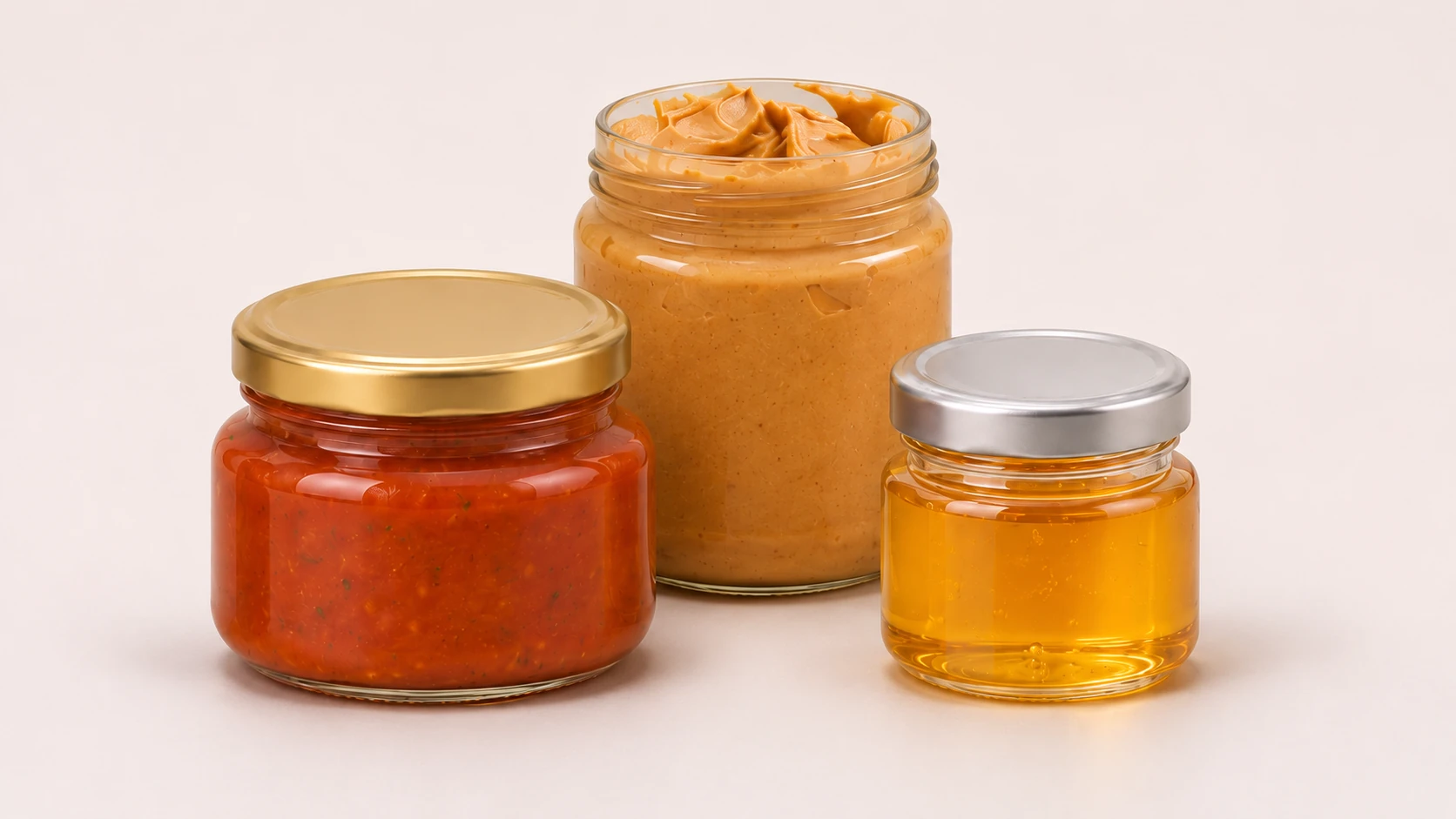
Sauce and paste examples
Match the rotary valve and nozzle to viscosity, particle content and filling temperature, then trial with product samples.
- Smooth sauces
- Paste-like condiments
- Viscous products such as honey
How it works
Product enters the hopper. A servo electric cylinder drives the metering mechanism, working with a rotary valve and nozzle to dispense a measured amount. The touchscreen provides target settings, trial-fill calibration and operating monitoring.
Matching the product and container
Provide viscosity, particle information, filling temperature, fill volume and container dimensions. Products with particles or higher viscosity should be trial-filled using samples.
Metering and dispensing
The hopper, metering cylinder, rotary valve and outlet assembly form the product path. Quick-release clamps connect the sections, and pneumatic components coordinate dispensing.
Coordinated metering and actuation
The servo electric cylinder drives metering; a pneumatic cylinder and linkage operate the rotary valve. The touchscreen sets dispensing speed and action delays to match product flow and the filling cycle.
Dispensing functions
The outlet includes product-clearing and air-blow controls. Settings adjust the number or duration of actions. Select their use according to product characteristics and filling trials.
Hopper and metering components
Pipes and clamps connect the hopper, metering cylinder and outlet assembly. The following views show their connections and overall arrangement.
Rotary valve and drive linkage
A pneumatic cylinder operates the rotary valve through a linkage. These views show the opposite valve end cover, clamps and cylinder-linkage mounting.
Pneumatics and servo drive
The air-preparation unit and valves sit inside the cabinet. The servo motor connects to the electric-cylinder drive.
Controls and operation
The PLC and touchscreen coordinate the servo drive and pneumatics. The interface provides target settings, calibration, action parameters, manual setup and status monitoring.
| Function | Operation |
|---|---|
| Target and calibration | Set the target weight, weigh a trial fill and enter the actual weight for calibration. |
| Fine adjustment | Adjust the fill using increase/decrease controls and the fine-adjustment value. |
| Action parameters | Set filling and nozzle delays, dispensing speed and air-blow duration. |
| Product clearing and cleaning | Set clearing actions and run the cleaning function. |
| Monitoring | View fault messages, current position and PLC input/output status. |
| Manual setup | Run individual actions as required during setup. |
Trial filling and calibration
Stop the machine before setting the target. Start a trial fill, weigh the result on an electronic scale and enter the measured weight in the actual-weight field. Repeat calibration before production, and check again after product or specification changes.
Specifications and use requirements
| Item | Specification |
|---|---|
| Filling range | 100–1000 mL |
| Filling heads | 1 |
| Metering method | Servo electric-cylinder metering |
| Controls | PLC and touchscreen |
| Overall dimensions | 1350 × 500 × 1600 mm (L × W × H) |
| Machine weight | Approximately 200 kg |
| Power supply | AC 380 V, 50–60 Hz |
| Power | 1500 W |
| Air pressure | 0.8–1.25 MPa |
| Air consumption | 1.05 m³/min |
| Filling temperature | Up to 90 °C |
Use and cleaning
This machine is not for corrosive products. Clean product paths and contact parts promptly after use, following a schedule suited to the product.
Stop the equipment before changing the target or operating settings. At the end of production, exit the operating system before switching off power.
Maximum stroke, minimum stroke and seal position are advanced setup parameters. Adjust them under qualified technical guidance to avoid overtravel.
Information for equipment selection
Please provide product name, viscosity, particle size and proportion, filling temperature, target volume and container samples. For line integration, include the trigger method, equipment layout and target cycle time.
The filling range is expressed by volume. When the interface uses weight for settings and calibration, use actual weighed product results; mL and g are not directly interchangeable.