On this page
Choose a filling machine around how the product behaves at the point of filling. Two products sold as liquid detergent can flow very differently, so the product name alone is not enough to select a machine.
A short pouring video at the normal filling temperature is a useful starting point. Add the fill quantity, bottle opening and batch target. These details help narrow the options before comparing output figures.
For clear, low-viscosity liquids without particles, a tabletop liquid filler may be worth considering after checking the wetted parts and feed arrangement.
For creams and smooth pastes, focus on feeding, the dosing range and nozzle behavior, including drips or product strings after the fill.
For bottles already moving on a conveyor, assess how filling fits between bottle handling and the next operation.
Describe the product at its working temperature
Temperature and flow
State the normal filling temperature and its expected variation. If heating, holding temperature or agitation is necessary, include it in the equipment scope. Do not assume these functions come with a standard filler.
Particles, foam and stringing
For products containing particles, give the particle size and distribution and use samples to assess passages and valves. For foaming or stringing products, watch the feed, fill and cut-off during a trial, then discuss nozzle arrangements and settings.
Contact parts and cleaning
Check the product and cleaning agents against the entire wetted path: tubing, valves, seals and nozzles. A stainless-steel exterior does not establish compatibility throughout that path. Include the number of recipe changes and the intended cleaning method when comparing equipment.
Compare the work around the filling cycle
| Arrangement | Product checks | Operator or line tasks |
|---|---|---|
| Tabletop liquid filler | Clear, low-viscosity, particle-free liquid; confirm composition and feed conditions. | Position and remove containers; manage settings and replenishment. |
| Single-nozzle paste filler | Cream or smooth paste; assess dosing range, flow and nozzle cut-off. | Feed the hopper, handle containers and provide the required air supply. |
| Conveyor-fed piston filler | Bottled liquid or flowable paste; assess dosing and feeding with samples. | Coordinate bottle entry, filling and discharge with the line. |
For short batches with frequent product changes, preparation and cleaning can occupy a substantial part of the working day. Compare the whole batch, from preparation to cleaning, and identify who replenishes product, checks filled containers and carries out changeovers.
List every pack size the machine must handle
Provide the smallest and largest fill quantities, neck opening, container height and body dimensions. Ask whether the same dosing components cover all sizes and what must change between them. A broad advertised range does not describe the work involved in changing formats.
The opening must suit the nozzle arrangement, and the container must remain stable during filling. If acceptance is based on net weight, specify that weight and the checking method. Do not treat milliliters and grams as interchangeable.
During a trial, use the intended product through the complete feed path and fill several containers consecutively. Check consistency, drips, foam, contamination around the neck and the adjustments needed after changing sizes.
Work backward from the batch target
Start with the number of containers and the net time available for filling. For example, a batch of 1,200 bottles with 120 minutes available needs an average of 10 bottles per minute. This is a planning requirement, not a machine performance claim.
At a manual station, include positioning, removal, replenishment and inspection. On a conveyor line, consider bottle supply, discharge and possible backups at capping or labeling. The automatic versus semi-automatic capping guide linked below can help you assess the next operation.
Equipment to explore for your workflow
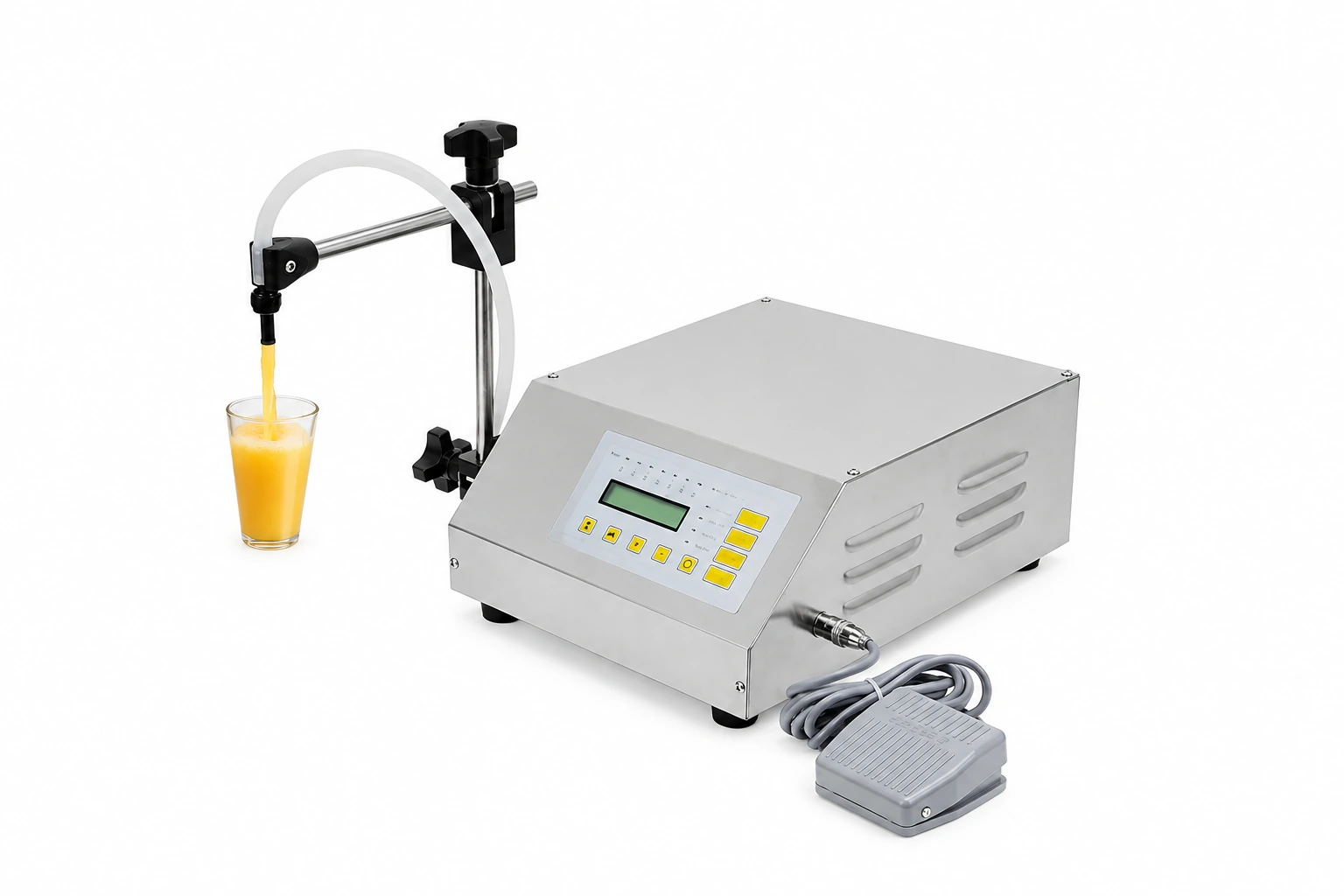
GFK-160 digital liquid filler
A compact, digitally controlled arrangement with manually positioned containers. Start by checking your clear, low-viscosity, particle-free liquid, fill quantity and feed conditions.
Single-nozzle paste filler
A hopper-fed pneumatic dosing arrangement operated by foot pedal, with containers loaded and removed manually. Assess the actual cream or paste, dosing range, outlet and air supply.
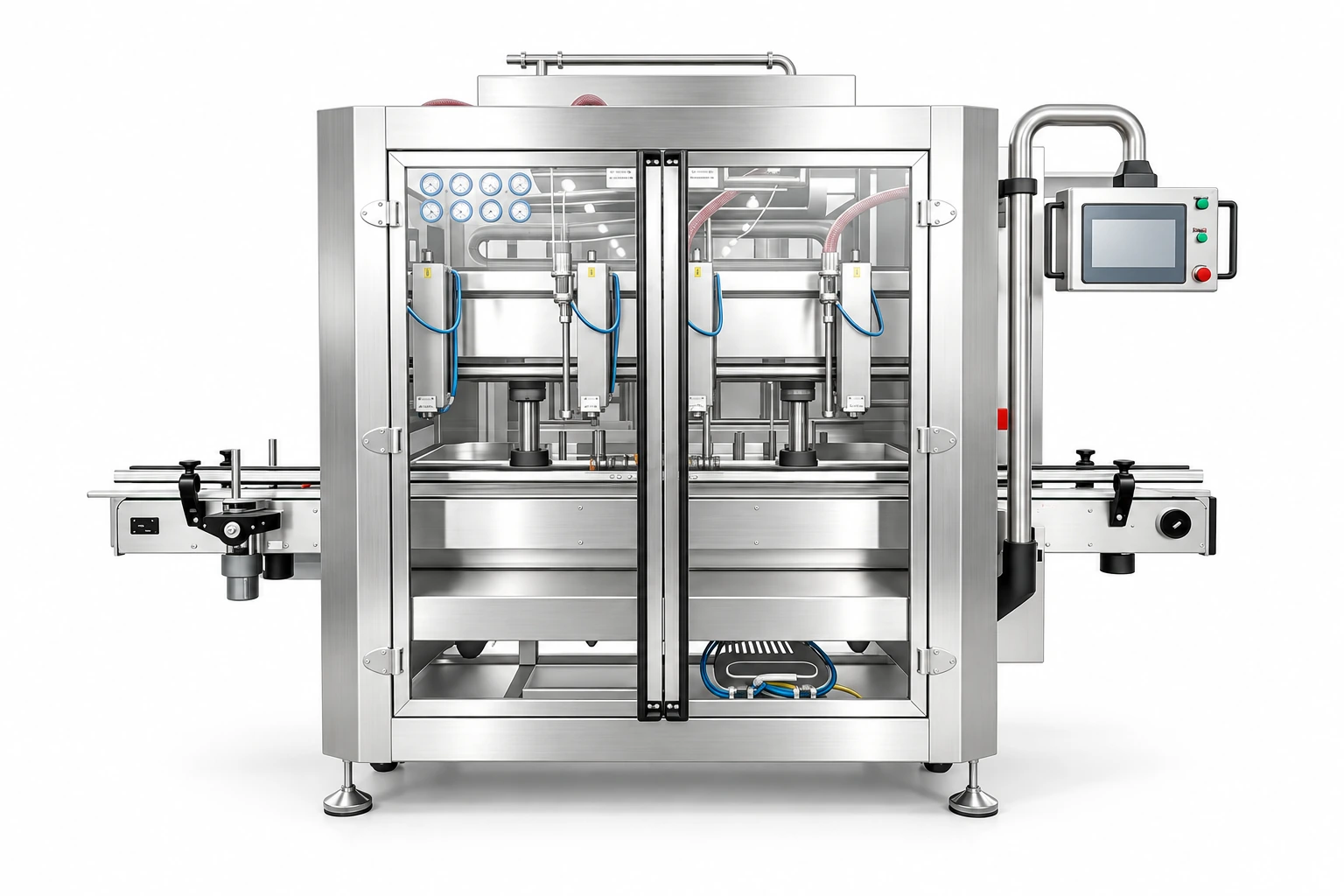
Four-head tracking piston filler
Four piston filling heads follow the moving bottle path during filling. Evaluate the product, container, feed capacity and coordination with upstream and downstream equipment.
What to send with a filling inquiry
- Product details
Name, composition and working temperature; note particles, foam or stringing and include a flow video.
- Containers and quantity
All pack sizes, opening and body dimensions, photos and the required volume or net weight.
- Production plan
Batch quantity, net operating time, available operators and product or container changeover frequency.
- Cleaning and site conditions
Cleaning method, power and compressed air. For line integration, add the layout and existing equipment.
Liquid and paste filling: common questions
Can one machine fill both liquids and pastes?
Some configurations can cover different flow characteristics. Compatibility still depends on the actual viscosity, particles, dosing arrangement and cleaning needs. Describe and trial each product separately.
Does pump flow equal bottles per minute?
No. Flow can help estimate dispensing time, but complete output also includes container handling, positioning, cut-off, replenishment and checks.
Should I choose the widest filling range?
First check performance at the quantities you use most. Other sizes may require different dosing parts or nozzles, so list all intended formats before comparing configurations.
What should I plan for future capping and labeling?
Record bottle formats, target pace, conveyor height, travel direction and available space. Identify the tasks that will remain manual and those you want equipment to handle.