RUIKE / FILLING EQUIPMENT
Semi-Automatic vs Automatic Filling Machines: Which Should You Choose?
For small batches, frequent product changes and staged investment, start by evaluating a semi-automatic filling station. For stable orders and longer production runs, consider an automatic line when filling is a proven bottleneck. There is no universal daily bottle count at which every business should switch.
What does an automatic filler actually automate?
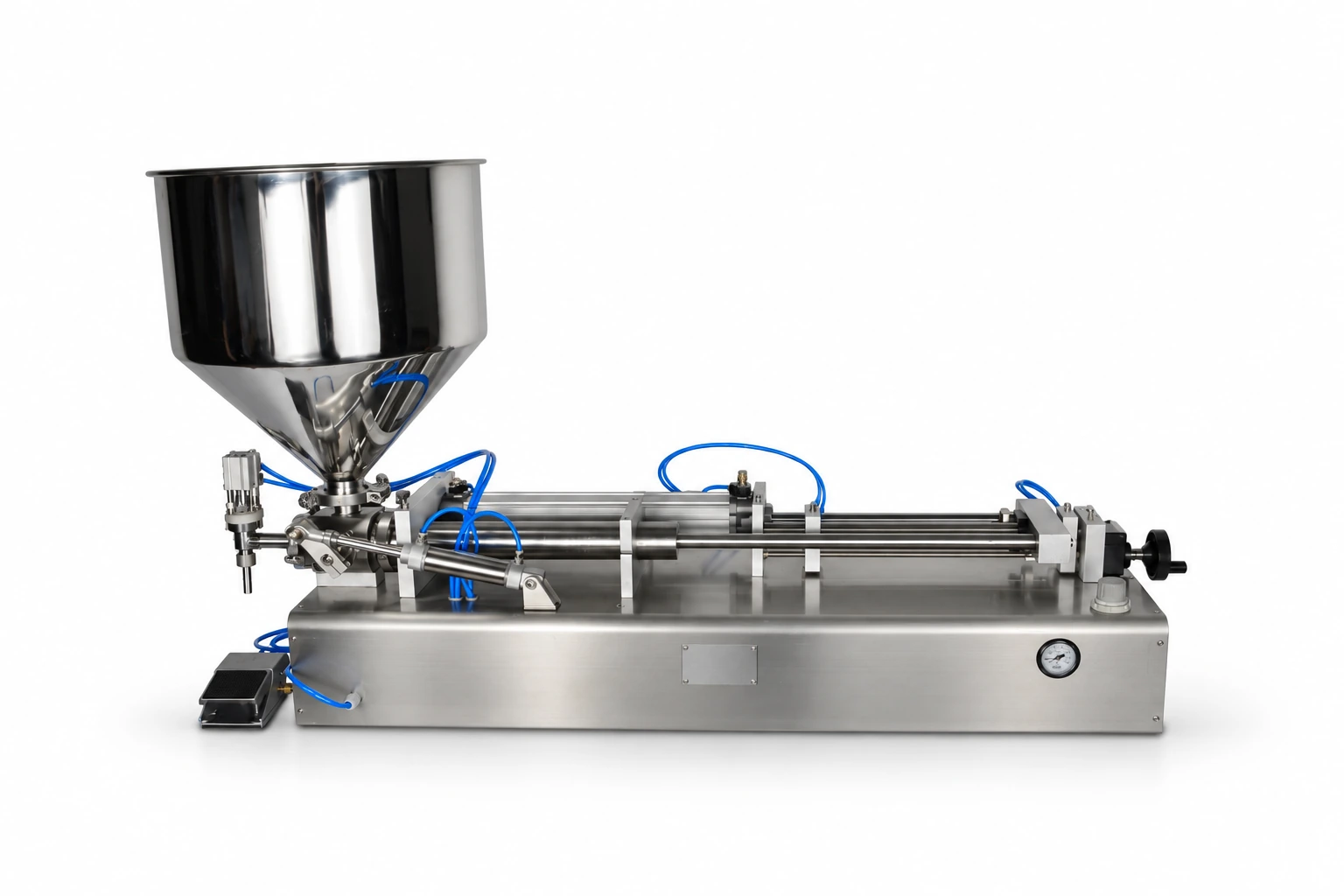
At a typical semi-automatic station, an operator places the container, starts the filling cycle and removes the filled bottle. The machine meters and dispenses the product. Some configurations offer repeat cycles, but container handling still needs an operator.
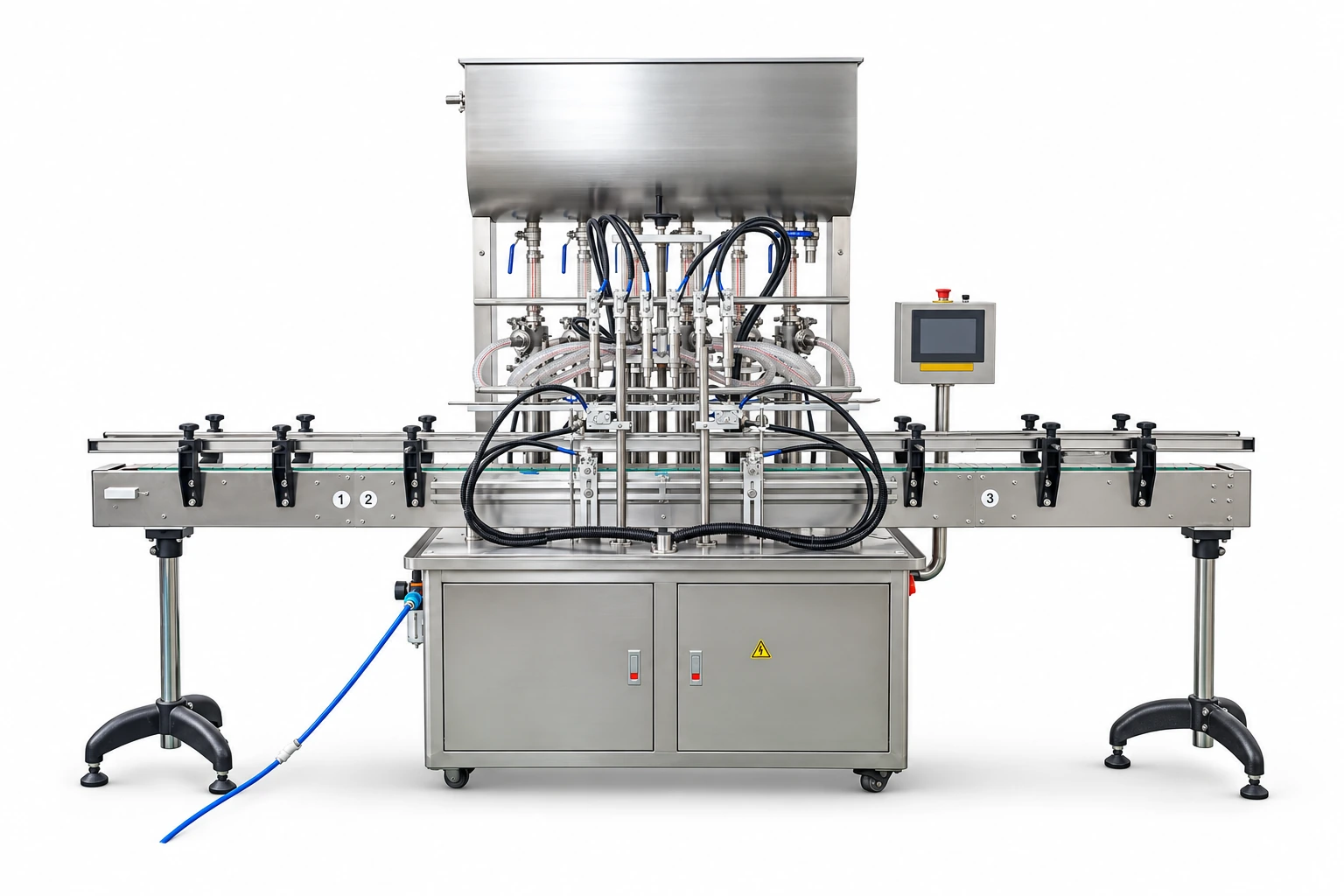
An automatic filler usually coordinates bottle transport, positioning, filling and discharge. That does not mean the quote includes bottle unscrambling, product replenishment, cap feeding, capping, labeling or case packing.
Follow one bottle through your process: prepare the empty bottle → fill → close → label → pack. Identify where bottles queue and where repetitive handling consumes the most time. That is the first place to investigate automation.
Compare the complete workflow
| Consideration | Semi-automatic filler | Automatic filler |
|---|---|---|
| Container handling | Operator loads and removes containers | Conveyor and positioning equipment coordinate with filling |
| When to evaluate it | Trial batches, varied orders and staged investment | Stable demand, longer runs and connected processes |
| Output constraints | Fill cycle, manual handling, replenishment and checks | Product supply, infeed, filling and downstream capacity |
| Changeovers | Assess wetted parts, disassembly and adjustment time | Also assess multiple heads, pipework, guides and positioning |
| Budget scope | Machine, tooling, workstation, utilities and staffing | Machine, conveyors, auxiliary equipment, commissioning and maintenance |
Automation level does not establish filling accuracy. Metering technology, product condition, fill quantity, valves and nozzles must be evaluated with your samples.
Calculate the output you need during available production time
An eight-hour shift is not necessarily eight hours of filling. Allow for cleaning, changeovers, adjustments, replenishment and checks.
For example, 3,000 acceptable bottles over 300 available minutes requires an average of 10 bottles per minute. This is a planning example, not a performance claim for any machine.
Then account for short stops and rejects in your assessment. Ask for a sustained trial with the actual product, containers and fill quantity, recording acceptable output rather than a brief dry-cycle demonstration.
If capping or labeling cannot keep up, adding filling heads will not increase finished-line output in the same proportion. Check the complete line before buying more filling capacity.
Check product compatibility before choosing the automation level
A water-like liquid, a stringy paste and a sauce containing particles can all have the same pack size while needing different feeding, metering and nozzle arrangements.
- Product behavior: supply viscosity information or a flow video, filling temperature, particle size and any foaming, stringing or corrosive behavior.
- Packaging: provide fill quantities, neck opening, bottle height and body dimensions. Soft or unstable containers need particular attention to handling.
- Cleaning: explain product change frequency, cleaning method, residue requirements and compatibility requirements for contact materials and seals.
Piston or pump metering and automation level are separate choices. For a closer look at product suitability, read how to choose a liquid or paste filling machine.
Compare costs beyond the machine price
Put each quote on the same basis: filler, hopper or product supply, conveyors, tooling, compressed air, electrical requirements, commissioning, wear parts and training.
For a semi-automatic station, include bottle handling, replenishment and inspection in the labor assessment. An automatic line still needs material replenishment, supervision and intervention when a problem occurs.
For frequent product changes, compare total batch completion time: preparation + filling + changeover + cleaning. A higher peak filling rate may not offset lengthy cleaning between small batches.
A simple payback estimate is additional installed investment divided by verified monthly net savings. Deduct extra maintenance, energy and consumable costs from the savings. Do not treat unconfirmed future orders as guaranteed income.
Two equipment formats to investigate
Single-nozzle semi-automatic paste filler
This format lets you evaluate a workstation where the operator handles bottles and the machine meters the product. Test product flow, nozzle cut-off and sustained operator output. See the single-nozzle paste filler and our semi-automatic paste filling article.
GT6T-6G six-head piston filler
The existing configuration uses six filling heads, a top-mounted hopper and an inline conveyor. Select the metering-cylinder range around the required fill quantity and confirm product feed and bottle-opening compatibility. Separate cylinder options do not mean one configuration covers every volume. See the GT6T-6G product page.
These formats illustrate different workflows; they are not universal recommendations for every liquid or paste. Confirm the configuration through product, packaging and sustained filling trials.
Questions buyers ask before choosing
Is semi-automatic always better for low output?
No. Also consider repetitive handling, staffing, container requirements and how certain future orders are. Compare actual batches rather than daily volume alone.
Is an automatic filling machine more accurate?
Not necessarily. Automation changes handling and cycle coordination. Verify accuracy and repeatability at the actual fill quantity with the actual product over a sustained run.
Can a semi-automatic filler be upgraded later?
Not every machine can be converted directly. Confirm control interfaces, cycle triggering, frame space and conveyor integration before purchase. Keeping the original station for short runs and adding a separate line may be more practical.
Why do filling machine prices vary so much?
Head count is only one factor. Metering technology, product requirements, bottle feeding, conveyors, cleaning arrangements and the delivery scope also affect cost. Compare equivalent configurations.
Send these details with your inquiry
- Product name, flow video and filling temperature.
- Every fill quantity and the required tolerance.
- Photos and dimensions of bottles, neck openings and closures.
- Acceptable bottles per shift, shift length and product-change frequency.
- Existing capping and labeling equipment, floor space, power and compressed air.
- Tasks you want operators to retain, budget range and expansion plans.
RUIKE can discuss a semi-automatic station or an automatic filling configuration with you, including the trial requirements and equipment scope.
Discuss your filling setup →