On this page
Three integration starting points
| Existing process | Possible addition | Integration focus |
|---|---|---|
| Centre seams already sealed | Edge-taping station | Transfer direction, spacing and line signals |
| Cartons manually closed but not taped | Centre + edge sealing combination | Both sealing stages and the connecting transfer |
| Upper flaps arrive open | Flap folding + centre + edge sealing | Flap condition, infeed and full sequence |
Map the existing process
Write down the current sequence from filling the carton to dispatch. Identify where the flaps are folded, where the centre seams are taped and where the carton is inspected. Record any strapping or palletising operation after sealing.
For an edge-taping stage that receives centre-sealed cartons, show that incoming condition in a short video. If cartons arrive with open flaps or incomplete centre seals, include the missing work in the equipment discussion. Adding an edge sealer alone does not define a complete carton-closing process.
Measure the transfer points
Provide a simple layout showing the infeed and discharge directions, existing conveyor heights and widths, and available floor space. Mark aisles and the space needed to replace tape rolls, adjust the machine and perform maintenance.
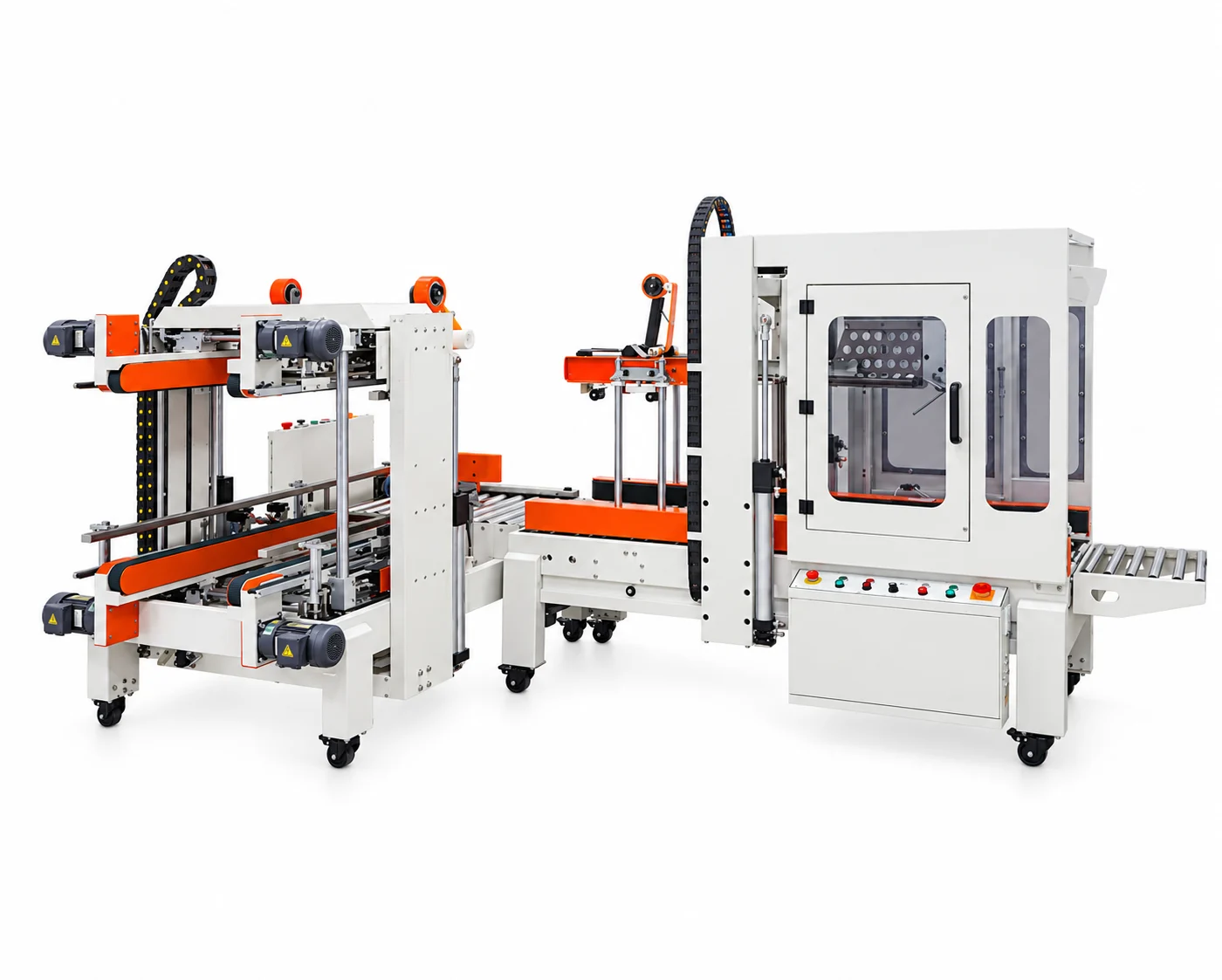
Confirm whether the proposed equipment moves the carton straight through or changes its travel direction. A transfer or turning movement can affect the footprint and the position of downstream equipment. Use the selected machine's layout drawing rather than estimating from an overall product photograph.
Define size changes and carton spacing
List the carton sizes and packed weights in production order. A line running one carton size for a shift has a different changeover requirement from a line receiving mixed sizes. Ask which settings are adjusted manually and which functions, if any, adapt automatically.
Specify the required output in completed cartons per minute. Include the spacing at which cartons arrive, any accumulation upstream and the interruptions caused by downstream equipment. A conveyor speed figure does not by itself establish the output of a complete line.
Agree on normal operation and stop behaviour
Clarify who feeds cartons, changes tape, checks the seal and clears rejected packs. Ask the equipment provider to define the proposed response when tape runs out, a carton stops or the downstream conveyor is unavailable. Do not assume these functions are included because a machine is described as automatic.
For a connected line, have the relevant equipment providers agree on signal interfaces, restart behaviour and guarding responsibilities. Confirm power and compressed-air requirements from the configuration being supplied.
Plan a representative acceptance trial
Use the actual carton and tape combinations, including the smallest, largest and most common cartons. Include filled samples that reflect normal production variation.
Record whether cartons transfer without distortion, tape reaches the specified positions, cut ends are consistent and finished packs meet the agreed closure requirement. Observe size changes and routine tape replacement as well as continuous running. Agree in advance how output will be measured and which interruptions are included.
A trial record that makes offers comparable
| Record | Why it matters |
|---|---|
| Carton size, filled weight and tape | Make trials comparable across equipment proposals |
| Accepted cartons and elapsed time | Measure completed output rather than belt speed |
| Stops, tape changes and changeovers | Show the operating work behind the output figure |
| Tape position and carton condition | Check the agreed closure result |
A useful inquiry checklist
Send RUIKE:
- A video of the existing carton packing and sealing sequence.
- Carton length, width, height and packed weight for each size.
- Photos showing the required top and bottom tape pattern.
- Tape material and width.
- Target completed output and mixed-size or batch-running requirements.
- A layout with conveyor heights, flow directions and available space.
- Details of the equipment immediately before and after edge sealing.