On this page
A practical equipment shortlist
| Carton arriving at the station | Equipment starting point | What to check |
|---|---|---|
| Flaps manually closed; centre seams need tape | FXC5050 Top & Bottom Carton Sealer / FXC5050X Small-Carton Sealer | Carton size, packed weight and tape width |
| Upper flaps need folding before centre sealing | DQFXZ5050S Automatic Flap-Folding Carton Sealer | Flap style, size adjustment and infeed method |
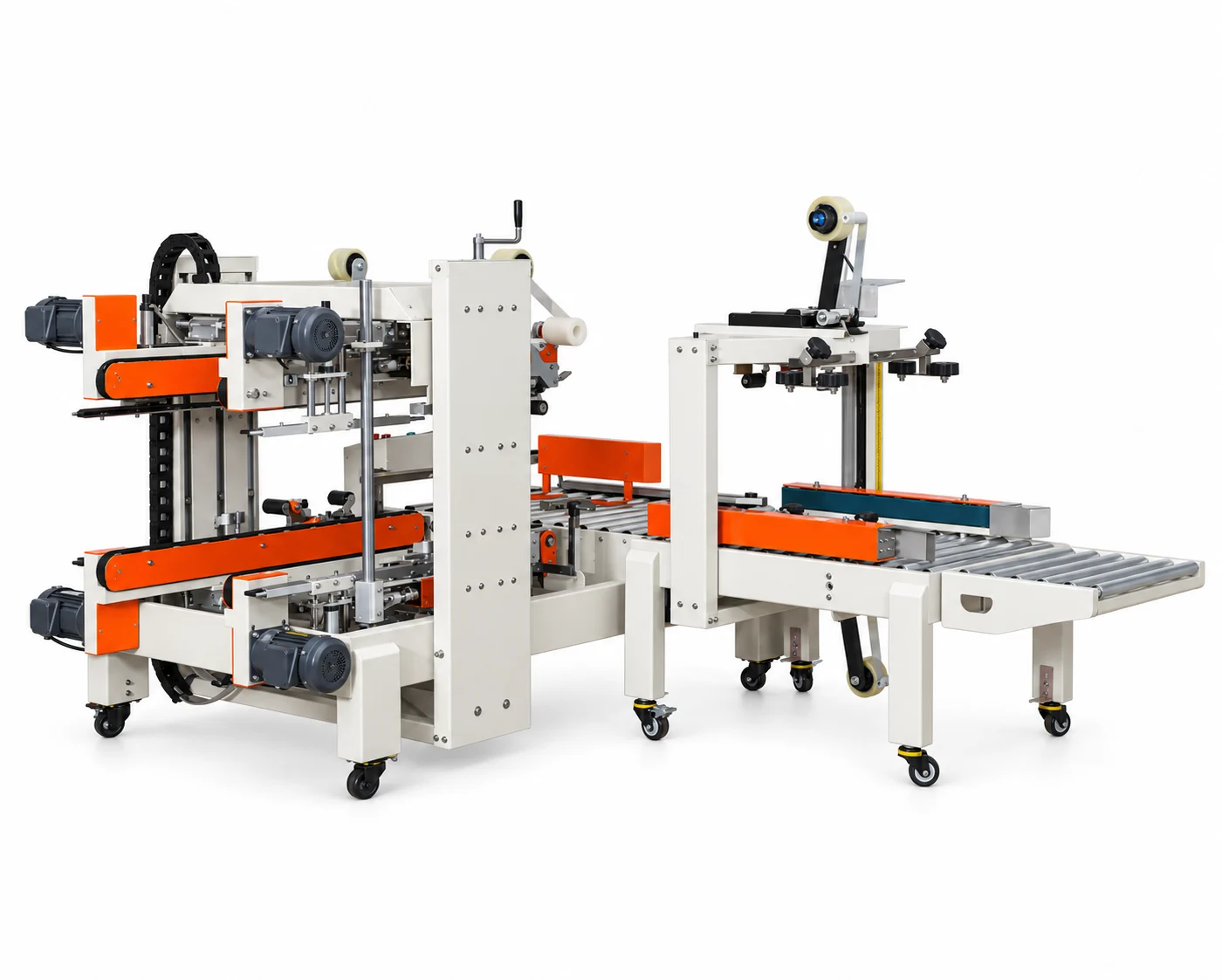
| Flaps closed; complete H pattern required | H-Type Carton Sealing Line | Centre sealing, transfer and edge taping scope |
| Open upper flaps; complete H pattern required | Automatic Flap Folding & H-Sealing Line | Folding and both sealing stages as a matched arrangement |
If cartons already leave an upstream machine with their centre seams taped, assess an edge-sealing station on its own. RUIKE’s DFXS-7050 page is a starting point for discussing that separate operation. A new centre-sealing machine is not automatically required.
Selection essentials
For a buyer comparing equipment, the first question is simple: what sealing work remains when the carton reaches this station?
Define the tape positions before choosing a machine
A top-and-bottom carton sealer applies tape along the centre seams. An edge-sealing stage addresses the additional flap-edge positions specified for the package. Combining the appropriate centre and edge taping operations can produce an H-shaped tape pattern.
Mark the required tape runs on photographs of both the top and bottom of your carton. Show whether centre sealing is already complete. This is more useful than asking only for a “four-corner machine”, because equipment descriptions can use different terms for the sealing arrangement.
Compare actual cartons, not just a size range
Provide the length, width, height and packed weight of each carton you intend to run. Include the smallest carton, the largest carton and the most frequently used size. If dimensions change between batches, describe the changeover frequency. If different sizes arrive mixed together, say so explicitly: automatic conveying does not necessarily mean automatic size adjustment.
The filled carton matters. Show flap alignment, bulging, surface coatings and any existing tape. A carton that looks square when empty may present a different shape after packing. Use representative filled samples to check handling and tape placement.
Specify the tape and the finished result
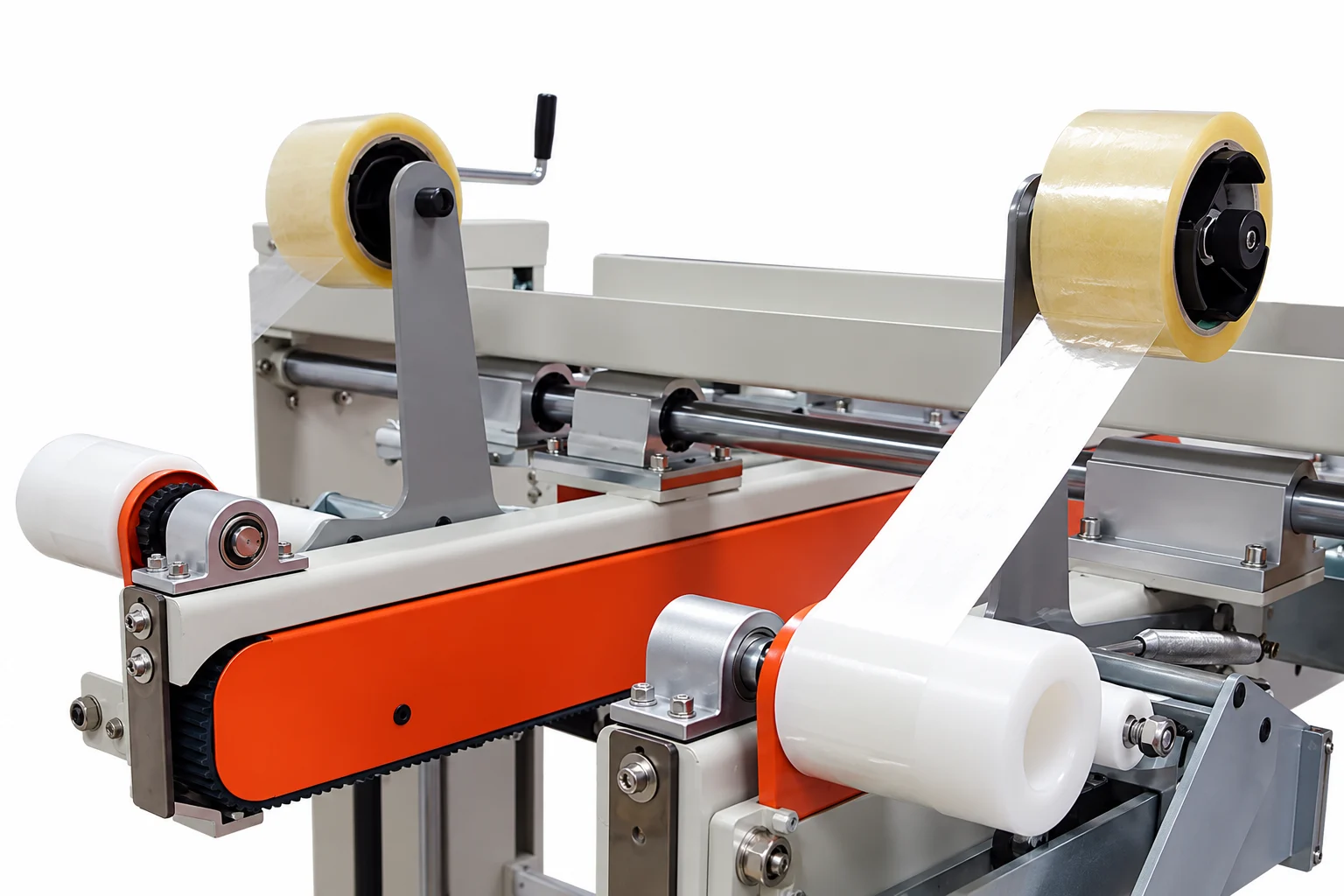
State the tape material and width you plan to use. Include the required tape positions and any customer packaging specification. Machine compatibility and adhesion to the carton surface are separate checks; a tape roll fitting the applicator does not establish that the finished seal meets your requirement.
For sample evaluation, look for continuous contact along the intended tape path, consistent placement, clean cut ends and the absence of crushed or distorted cartons. Record the result on the carton types you will actually ship.
Ask for output in completed cartons
A conveyor speed in metres per minute is not a finished output in cartons per minute. Carton length, spacing, transfer movements, operator feeding and downstream stops all affect the line result. State your target in completed cartons per minute and ask for evaluation with your carton sizes and working sequence.
Compare the scope of each quotation
Check whether the proposal includes only edge taping or also the centre-sealing station, flap handling, transfer conveyors and line controls. Ask how carton sizes are changed and what the operator does during normal running. These details determine whether two quotations cover the same work.
Check both stations in a combination
For an H-sealing combination, check the carton limits, tape specification and operating sequence of both stations. The usable range of the complete arrangement must be confirmed as a combination; do not take one station’s maximum dimensions as the line specification.
Prepare an equipment inquiry
Send RUIKE your carton dimensions and packed weights, top-and-bottom seal photographs, tape specification, target output and a short video of the current packing process. Include the available space and the equipment immediately before and after the proposed station.