
RUIKE / DBF-1000AN
Gas-Flushing Band Sealer
Introduce gas through a bag-mouth nozzle and heat seal in a continuous conveying process. This configuration uses an external gas supply and combines bag support, gas introduction and sealing in a tabletop machine.
Request equipment selection ↗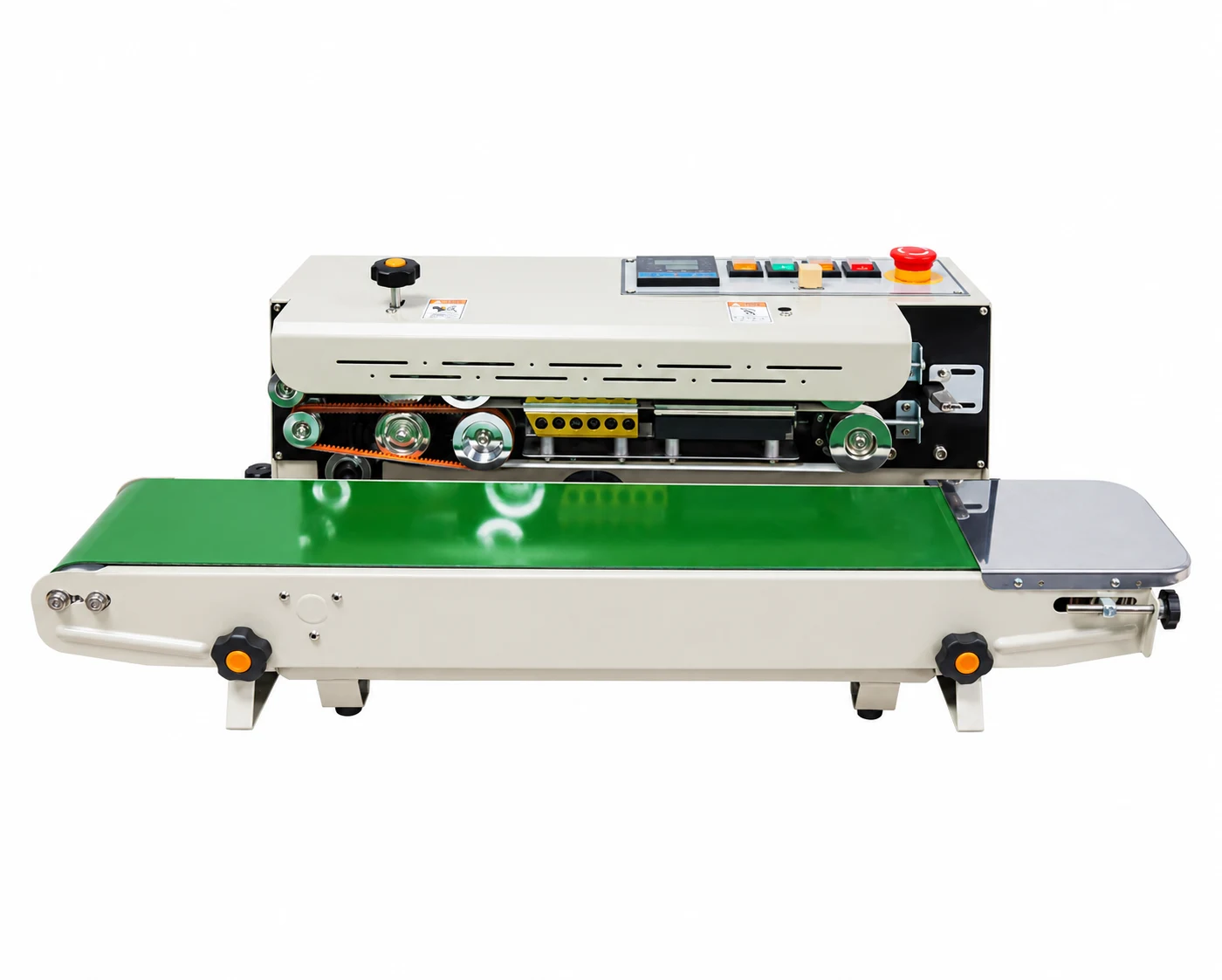
Choose around your bag and process
For compatible flexible packs where the process calls for gas introduction before closing the bag. Define the gas and packaging requirements before selecting the setup.
Present the bag to the nozzle → Introduce gas → Convey and heat seal → Inspect the sealed pack
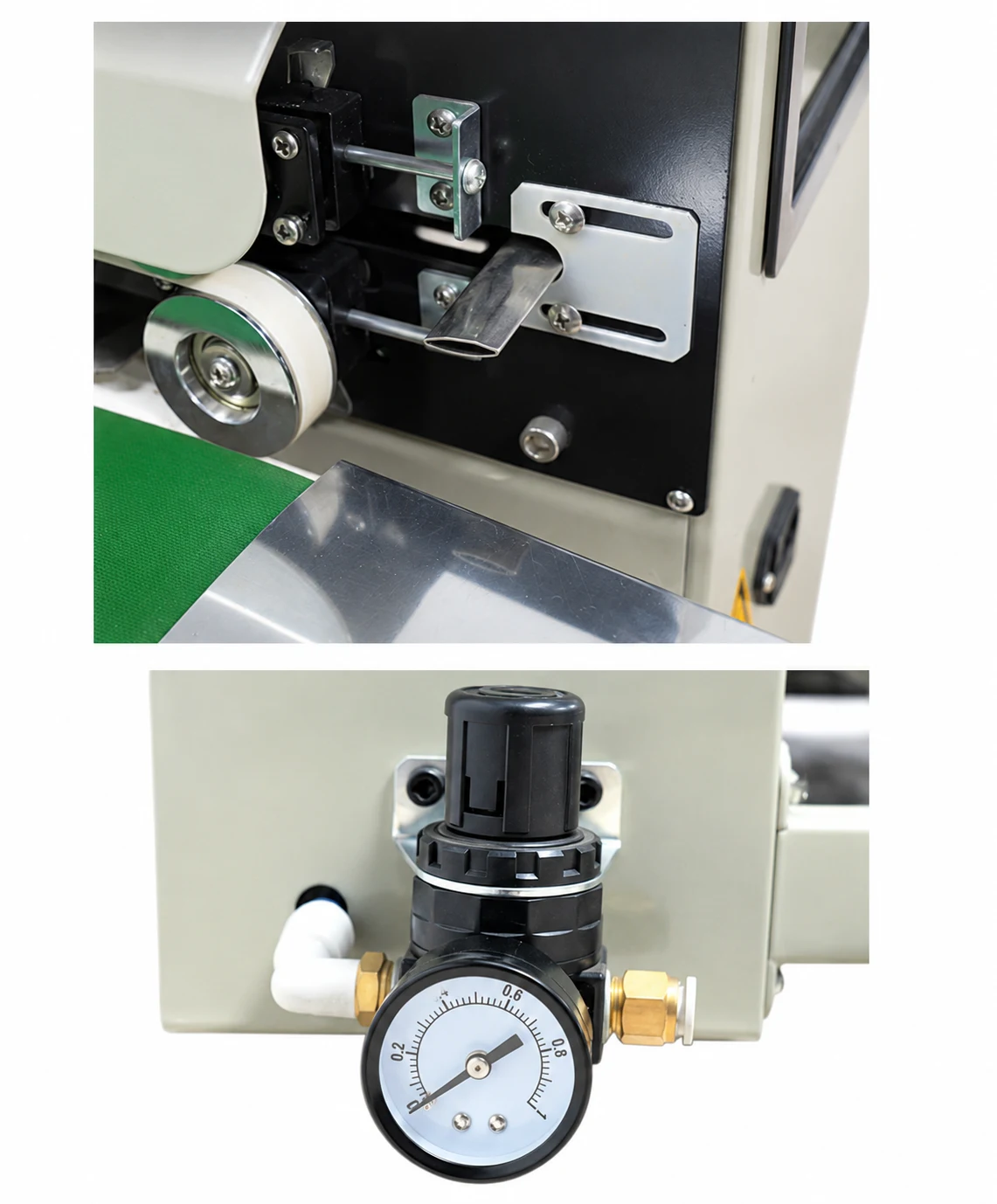
Gas nozzle and pressure regulator
The upper view shows the nozzle and its slotted mounting bracket; the lower view shows the regulator and gauge. Gas settings must be matched to the packaging process and available supply.
Bag-mouth gas nozzle
The nozzle introduces gas before the sealing section. Bag opening, nozzle position and feed consistency influence the process.
External gas connection
Provide the gas source and pressure requirements with the inquiry. The machine image does not imply that a gas cylinder or gas generator is included.
Specifications
| Rated power | 700 W |
|---|---|
| Belt speed | 0–12 m/min |
| Seal width | 6–12 mm |
| Conveyor load | ≤3 kg |
| Machine dimensions, L × W × H | 815 × 425 × 315 mm |
| Gas supply | External supply |
Belt speed is not finished bags per minute. Output depends on bag handling, spacing and the heat-sealing settings.
Application questions
Does gas flushing guarantee a shelf life?
No shelf-life period is specified by this machine alone. The product, gas composition, film barrier, residual atmosphere and seal integrity need to be evaluated together.
What should a sealing trial check?
Use filled bags in the intended film structure. Check bag feeding, seal appearance after cooling and the required seal-strength or leak test for the application. Where coding or gas flushing is involved, include print quality or atmosphere testing in the trial.
Send your bag and packing requirements
Send the bag material and layer structure, dimensions, filled weight, required seal width and target output. Include filled samples and the available electrical supply; add gas or compressed-air details where relevant.
Request equipment selection ↗